
 Toh Shiya
Join TOH SHIYA on a journey into Singapore’s night-walking scene, where a niche hobby unveils the hidden world of nocturnal wildlife.
As the rest of the city turns its lights off and settles into bed, the streets quieten. However, this is when night-walkers say their hobby truly begins.
Don’t worry, these night-walkers aren’t trying to haunt your dreams. Armed with only a flashlight and their phones, these youths trudge through dimly lit roads not in search of ghosts or after-dark entertainment, but wildlife. This practice, known as going on a night walk, involves exploring Singapore’s green spaces after dark to observe nocturnal wildlife. From spiders to owls, night-walkers can find nocturnal wildlife that emerge only after the city turns in for the night.
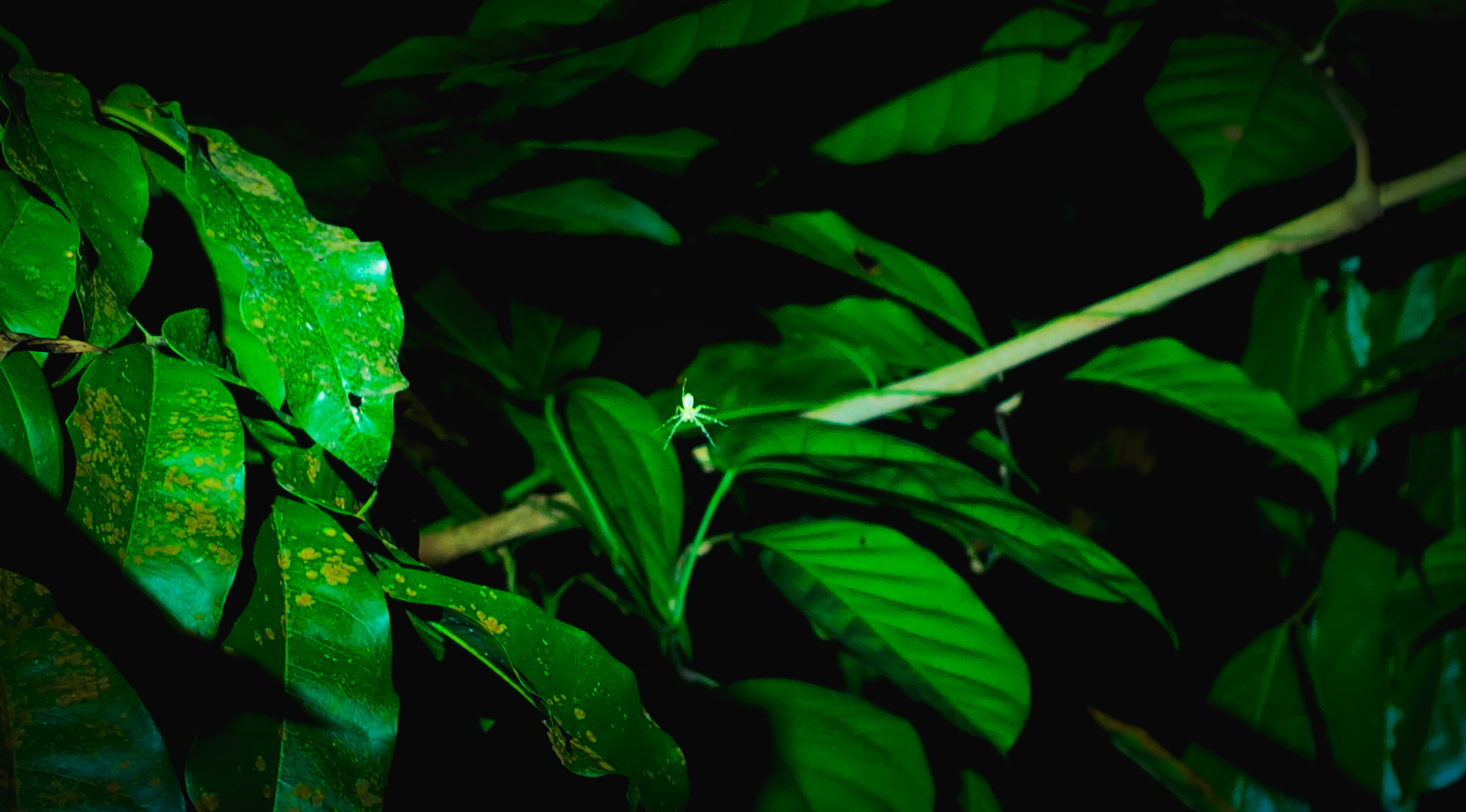
With limited accessibility to green spaces at night and a smaller variety of animals compared to other countries, the night walk scene in Singapore is rather niche. Often misunderstood as dangerous and pointless, it has quietly attracted a small but growing community of environmental enthusiasts who have come to appreciate a commonly overlooked side of Singapore.
Exploring What Lurks in The Dark
Amongst the group of wildlife enthusiasts is Kuah Leon, 17, who first started going on night walks in April 2025. When invited to experience night walks for himself, he was simply curious to give it a try. “I thought, why not just go out and explore and try to find those animals I saw online,” he said.
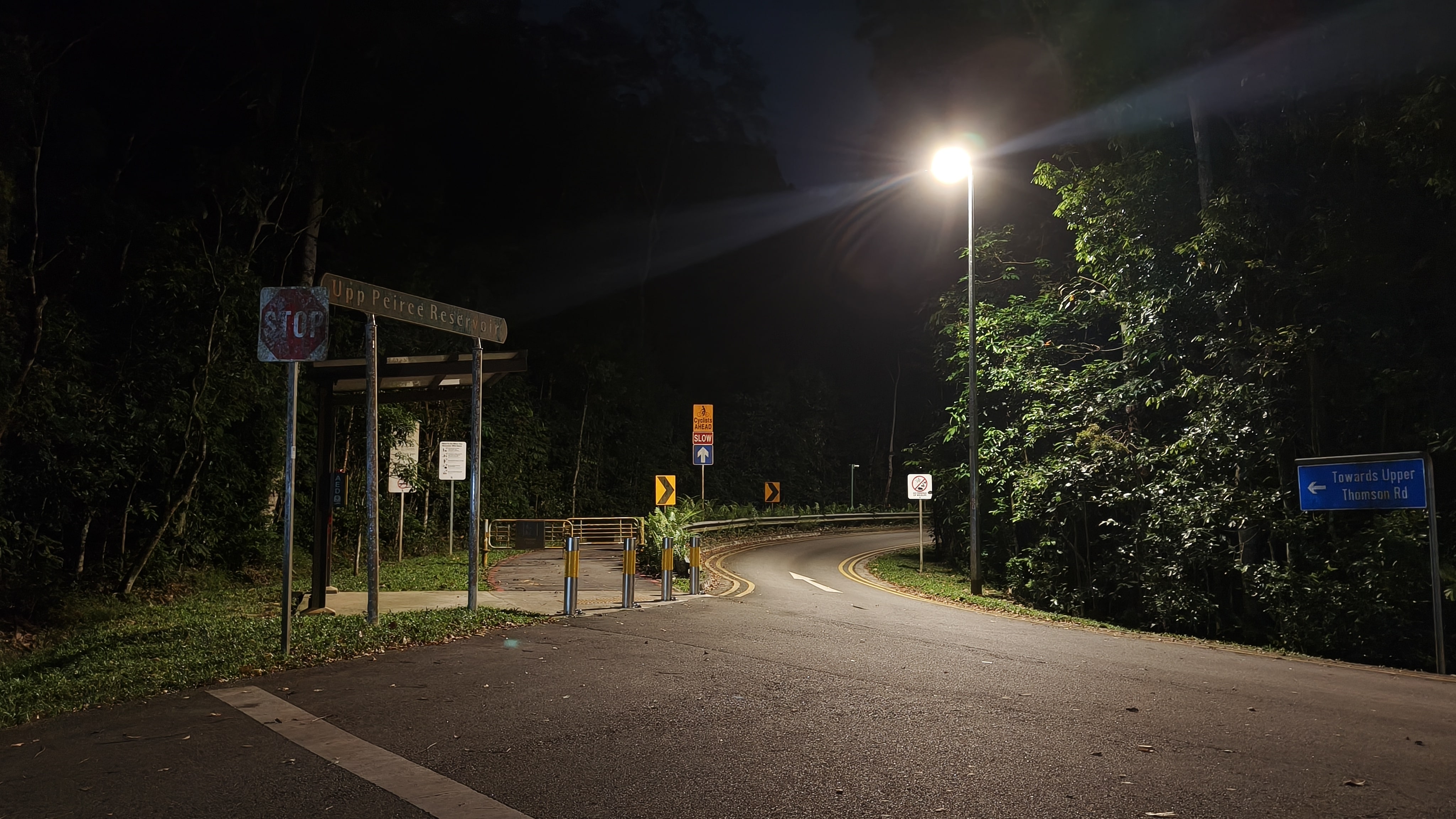
His first night walk took place along the very spot the UrbanWire explored, just off Old Upper Thomson Road, an area known among night-walkers for its vast biodiversity. Since then, Leon has been going on night walks with his friends almost every month. For him, nightwalking is both a social activity and a way to better understand wildlife in Singapore.
Unlike nature walks in the day, Leon describes finding wildlife with little to no light, a skill that develops through experience. Initially, he found himself scanning the dense mass of trees aimlessly, unsure of where to look, which often left him spotting nothing at all. “There are certain areas to look out for, for certain animals,” Leon states. Over time, he learnt where to spot specific wildlife, like noticing that arboreal snakes are often spotted in trees, while others, such as pythons, are more commonly seen on the ground.
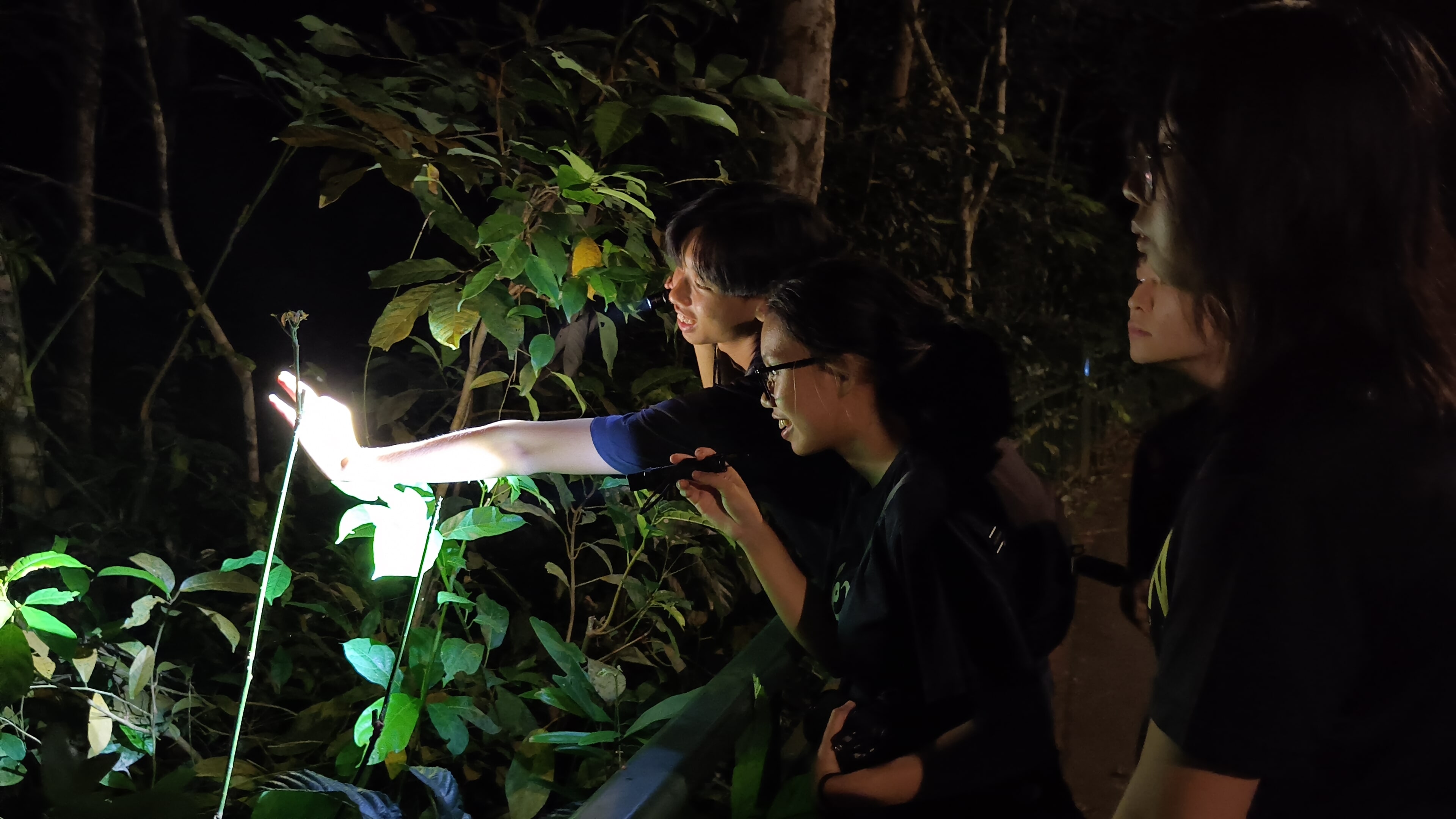
Night-walkers are required to utilise all their senses to recognise subtle signs of nearby wildlife. One commonly used technique is spotting eye-shine, which involves looking for the reflection of their torchlight from an animal’s eyes, which could make finding animals hiding in the dark easier. Listening out for rustling sounds in bushes can also indicate movement nearby. These cues help transform night walks from just aimless wandering into a more deliberate practice, giving enthusiasts a higher chance of spotting wildlife.
The Reason Behind the Unfamiliarity
While youths like Leon were introduced to night walks through personal connections, it can be difficult for newcomers with no prior knowledge to get started. This is where experienced guides and seekers play a crucial role in introducing beginners to this niche hobby.
Meet Ms Kong Man Jing, 31, better known as Biogirl MJ co-founder of Just Keep Thinking, a science and educational social media company. She often organises guided nature walks, including night walks. According to her, people’s first impressions of this activity is often shaped by fear or misconceptions.
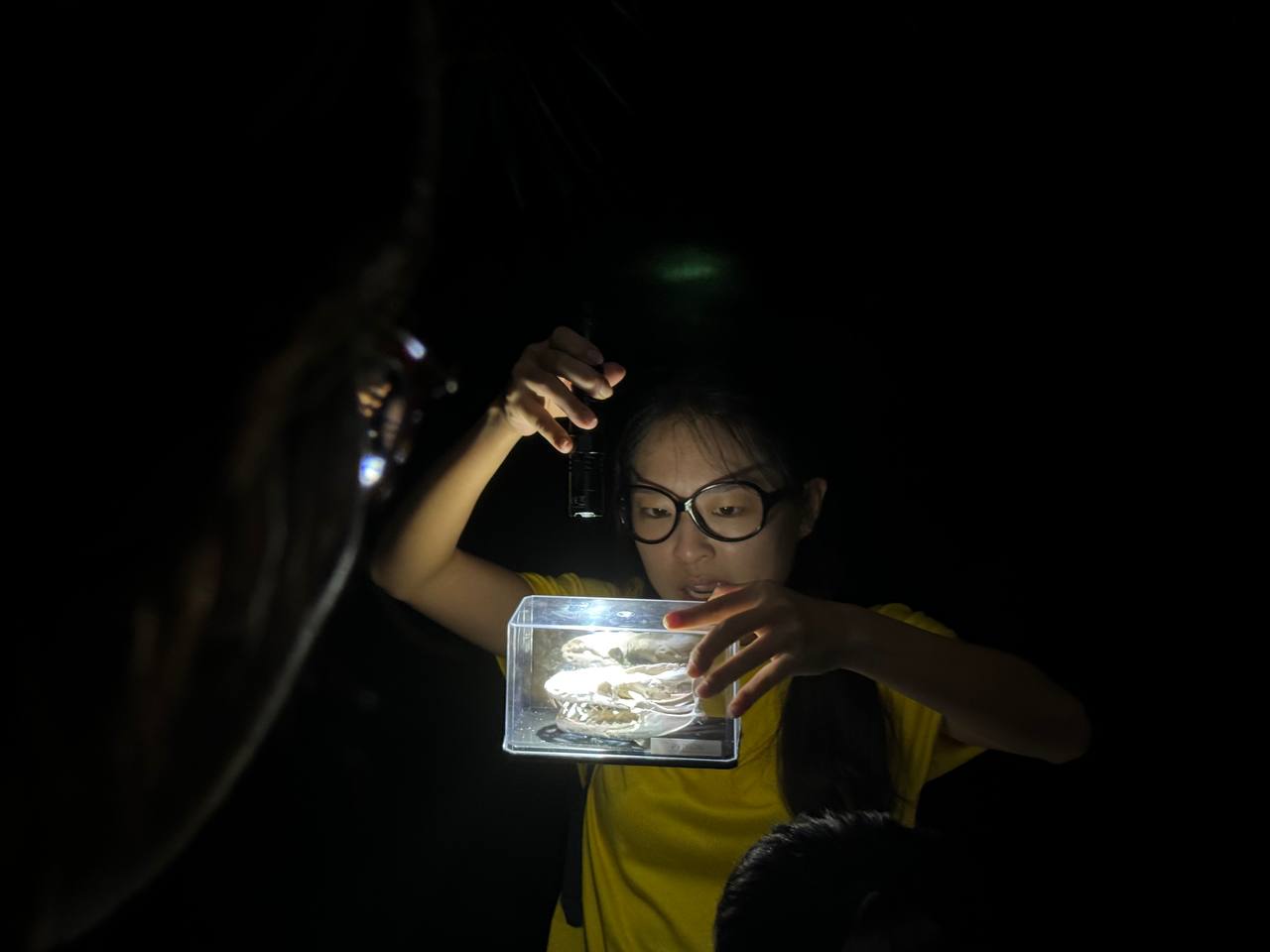
“Some people ask if there are ghosts,” she said, noting that interest in joining her guided night walks tend to drop during the Hungry Ghost Month on the lunar calendar. Others assume there is little to see at night compared to the daytime, believing that Singapore’s wildlife becomes inactive after dark.
In reality, Ms Kong explained that nightwalks reveal a side to Singapore that many are unaware of. While most green spaces are closed after 7pm, there are still areas where you can legally observe wildlife responsibly. Depending on the location, night-walkers can encounter different creatures; from owls and snakes, to monkeys or even larger mammals like the sambar deer.
Finding Nature in the Heart of a City
Admittedly, pursuing this hobby is more challenging in a small country like Singapore due to its limited land area and the few nature spaces accessible to night-walkers. However, Singapore’s size is also an unexpected advantage, as it offers lessons in how nature and urban life can co-exist.
Unlike other countries where you have to travel for hours to reach the nearest nature area, “Our biggest nature reserves are right in the heart and centre of Singapore,” Ms Kong noted.
Even in a city dominated by towering skyscrapers, a small patch of greenery is enough for wildlife to thrive. Many Singaporeans who participate in her guided walks are surprised to see that fireflies can be found in Singapore, especially in a tiny forest surrounded by Housing and Development Board (HDB) estates.
Learning to Overcome the Unfamiliar
Misunderstandings and unfamiliarity with wildlife often lead to fear, especially when animals appear in Singapore’s urban areas. Snakes, in particular, are commonly perceived as aggressive, despite typically avoiding human contact unless provoked.
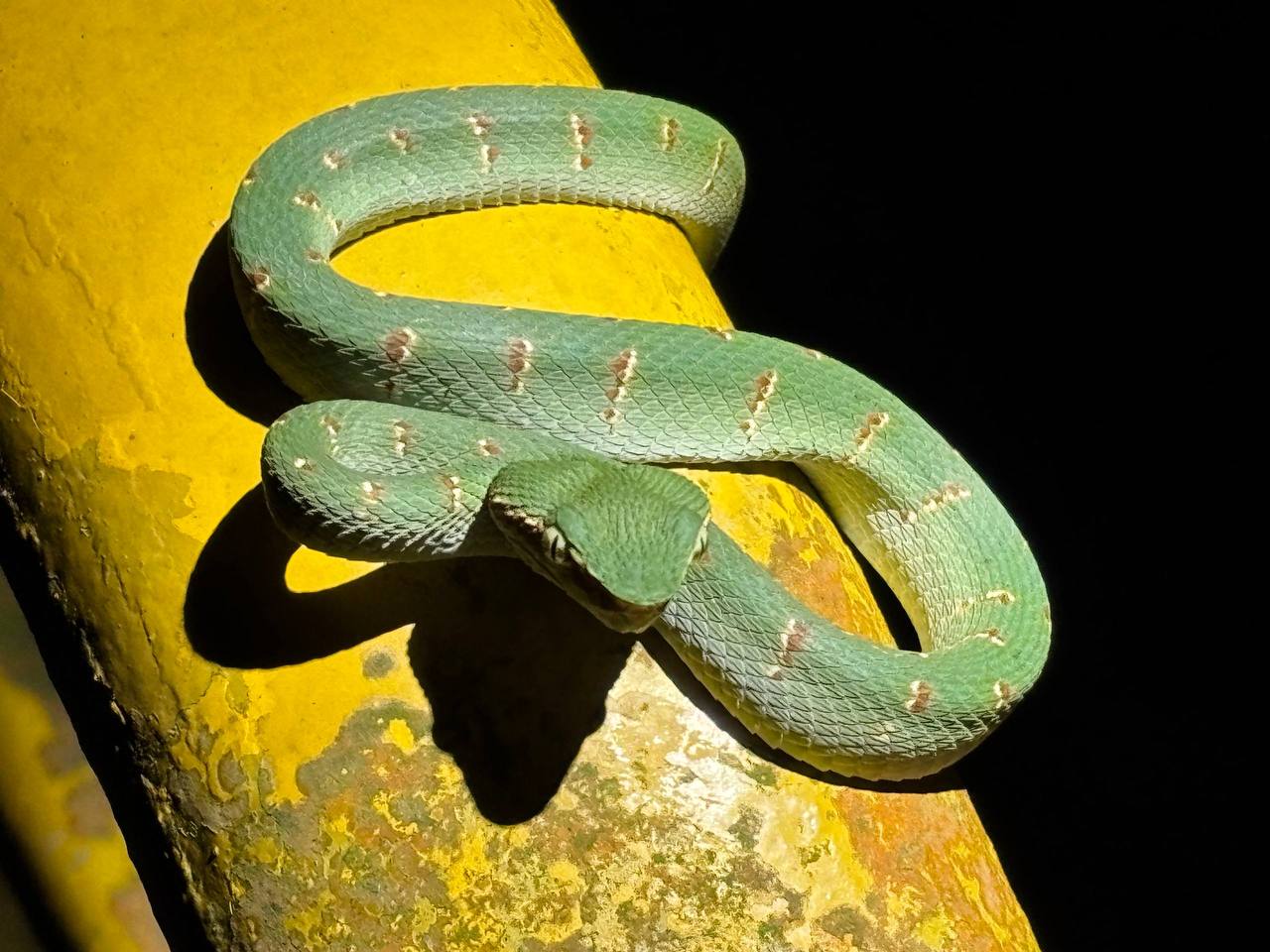
Leon hopes that spending time in nature and observing wildlife can help change these negative perceptions. “If you don’t provoke them and leave them alone, they’ll also leave you alone.”
Ms Kong re-emphasises the importance of respecting wildlife during her guided walks, and that night walks are centred around observing rather than interacting with them. Participants are reminded not to touch or disturb the animals, allowing wildlife to behave naturally.
The Path Towards Conservation
For Ms Kong, night walks serve as an entry point into conservation awareness, teaching participants to slow down and appreciate the nature around them. Feedback from participants often reveals surprise at the level of biodiversity present in Singapore, especially at night. Some may have visited those same locations during the day without realising how much fascinating wildlife surrounds them.
“We cannot protect what we do not love, and we cannot love what we do not know,” Ms Kong quoting a phrase she often shares with her viewers. She hopes that raising awareness of the wildlife around us will enable them to be more inclined to care about the importance of conserving nature.
In a city where nightlife is often associated with clubbing and alcohol, night walks reveal a side of Singapore that often goes unnoticed. They serve as a reminder that even in one of the world’s most urbanised environments, nature can still be found all around us.
Watch the full video here: https://youtu.be/UIzt-7qSTnE