
 Sarah Adriana
As Jagua tattoos gain popularity, more youths are embracing body art that allows experimentation without lifelong commitment. Join SARAH ADRIANA as she explores how this centuries-old tradition is becoming a modern tool for self-expression, growth, and choice.
Jagua tattoos have been around for some time now, but in recent years they have seen renewed popularity among youths. Blue-black designs now appear on their arms, backs, and more — you can spot them everywhere at flea markets, art fairs, and increasingly on social media.
Unlike permanent tattoos, Jagua offers something different: a way to experiment without lifelong commitment. As more youths navigate identity, aesthetics, and self-expression during a period of constant change, Jagua has emerged as an alternative form of body art that reflects flexibility rather than hesitation.
Is this simply the latest trend for those unwilling to commit, or does the growing appeal of Jagua point to something deeper about how youths choose to express themselves today?
What Exactly is Jagua?
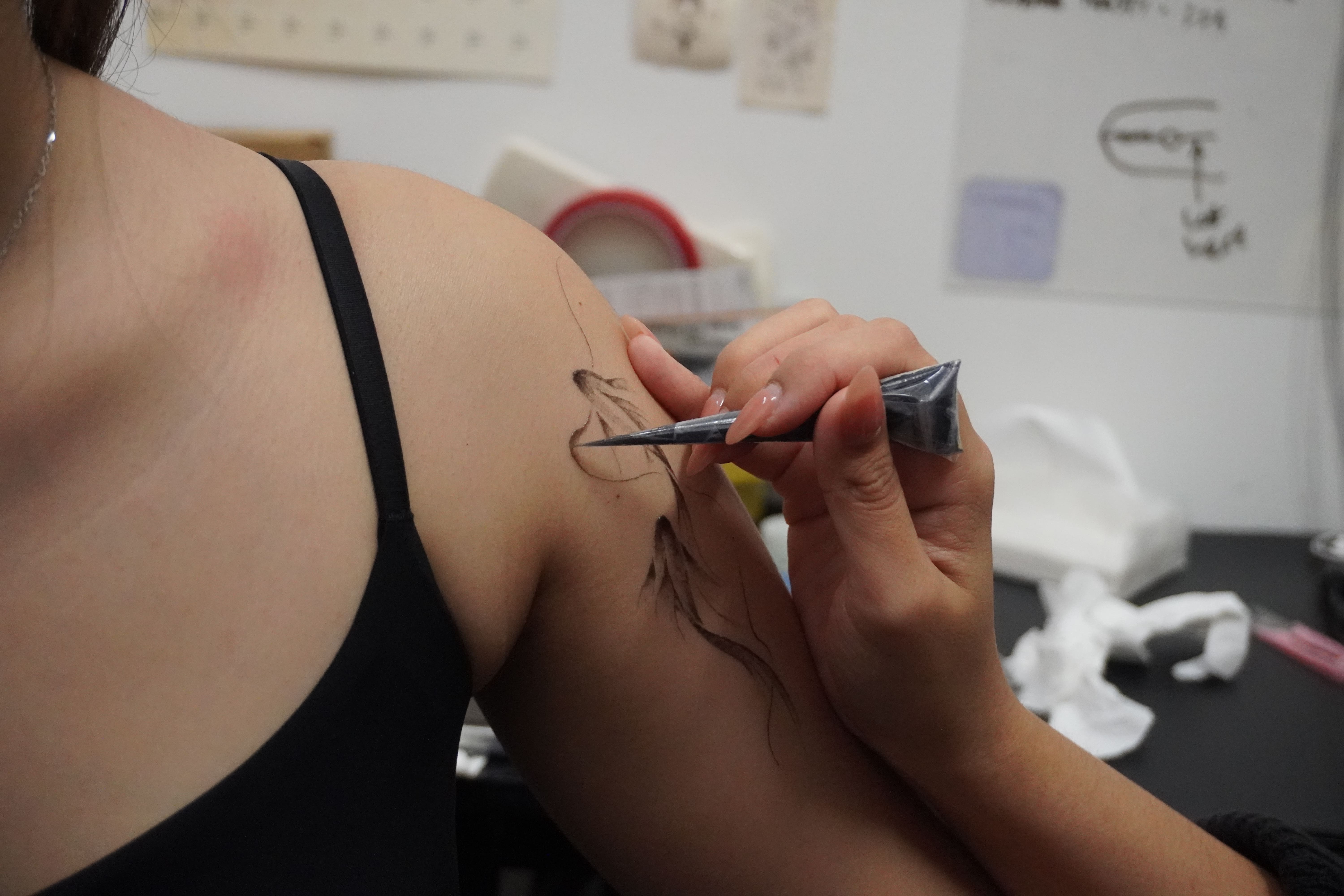
Not to be confused with henna which leaves a reddish-brown earthy stain, Jagua is a natural dye that originates from the Genipa americana, a fruit found in Central and South America. Jagua has been around for centuries, with Indigenous tribes in the past using it for medicinal and cultural purposes, not solely as a form of body art or self-expression.
This blue-black dye is non-permanent and works through enzyme interaction between the fruit and the protein in your skin, leaving a stain that typically lasts between two to three weeks, depending on how you care for it.
The Artist: Meet Cyann
Meet Cyann Lee, 27, the founder and lead artist of HeyCyann. She first started practicing this art form in 2017 as a hobby while studying in polytechnic, never imagining that this would later shape the course of her life.
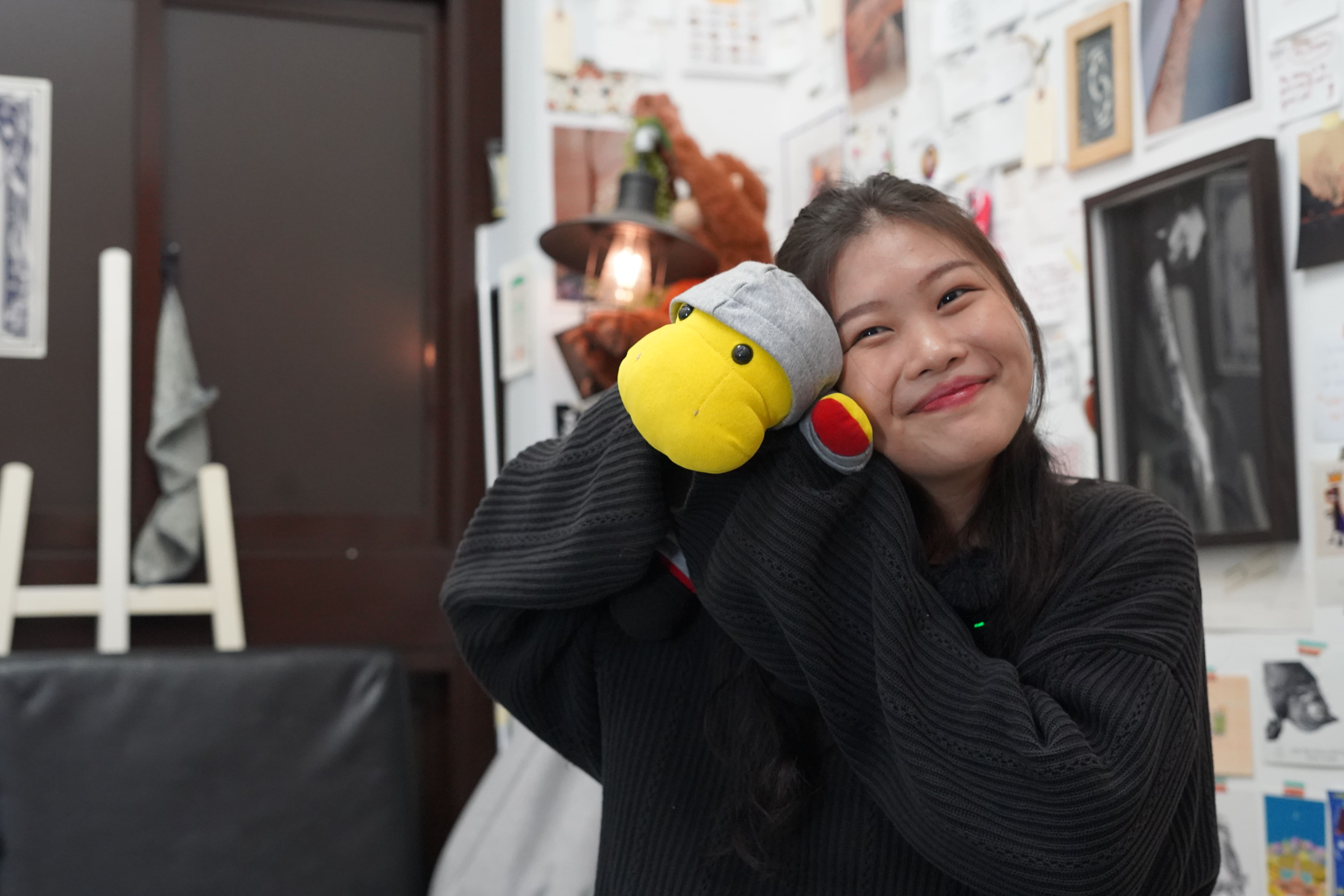
“I’ve always been inclined to the arts, and I was a graphic designer in my day job while doing Jagua on the side. So back then I was just taking appointments at random cafes outside and I think it was in 2022 when I opened my first studio,” Cyann shares.
Cyann never imagined she would become a Jagua artist and was content to remain a graphic designer for the rest of her life, until she eventually decided to pursue Jagua full-time. She started as a one-woman show, running everything herself from appointments to events. Today, she now leads a seven-person team, with around three artists training under her.
As such, HeyCyann has been able to expand and grow, holding more pop-ups and events locally while slowly making their mark internationally in countries such as Malaysia, Indonesia, and Australia. In 2025, they took part in the Brisbane Illustration Fair and Toasty Art Market, both held in Brisbane.
The Craft Behind The Ink
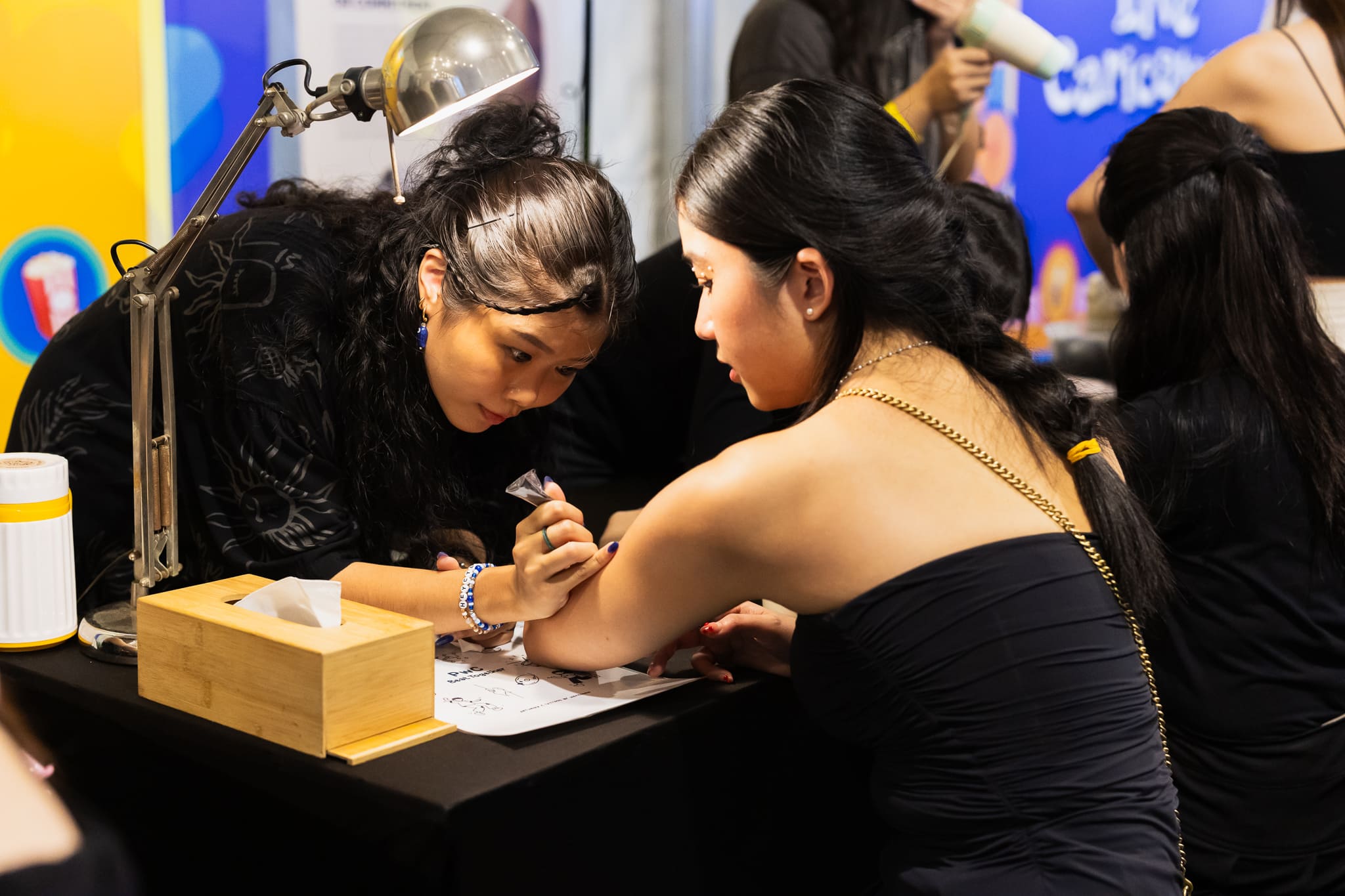
Cyann chooses to make her own Jagua ink, by importing the fruit from the US. Though it’s a tedious process that can take four to five hours for a single batch, she considers it to be a safer alternative than buying them off Taobao or Shopee which newer and emerging artists may choose to do. Jagua inks that are bought online are chemically made and can potentially cause skin blistering.
With her ink formula, the tattoo will last for two to three weeks, its longevity depending on each individual’s lifestyle.
“So if you gym and sweat a lot or you shower and swim a lot, then of course it fades faster. And everyone’s skin renewal cycle is also a bit different… I’ve also had clients [whose ink] lasted a month, but that’s very rare,” Cyann mentions.
Why Youths Are Choosing Jagua
As this trend continues to grow, youths like Tegan Sim En,19, have found Jagua to be a gateway into body art rather than a replacement for permanent tattoos.
Tegan got her first Jagua tattoo in 2023 after visiting a body art convention. While she wanted to approach tattoo artists at the event, she knew she was not ready to commit to a permanent tattoo just yet.
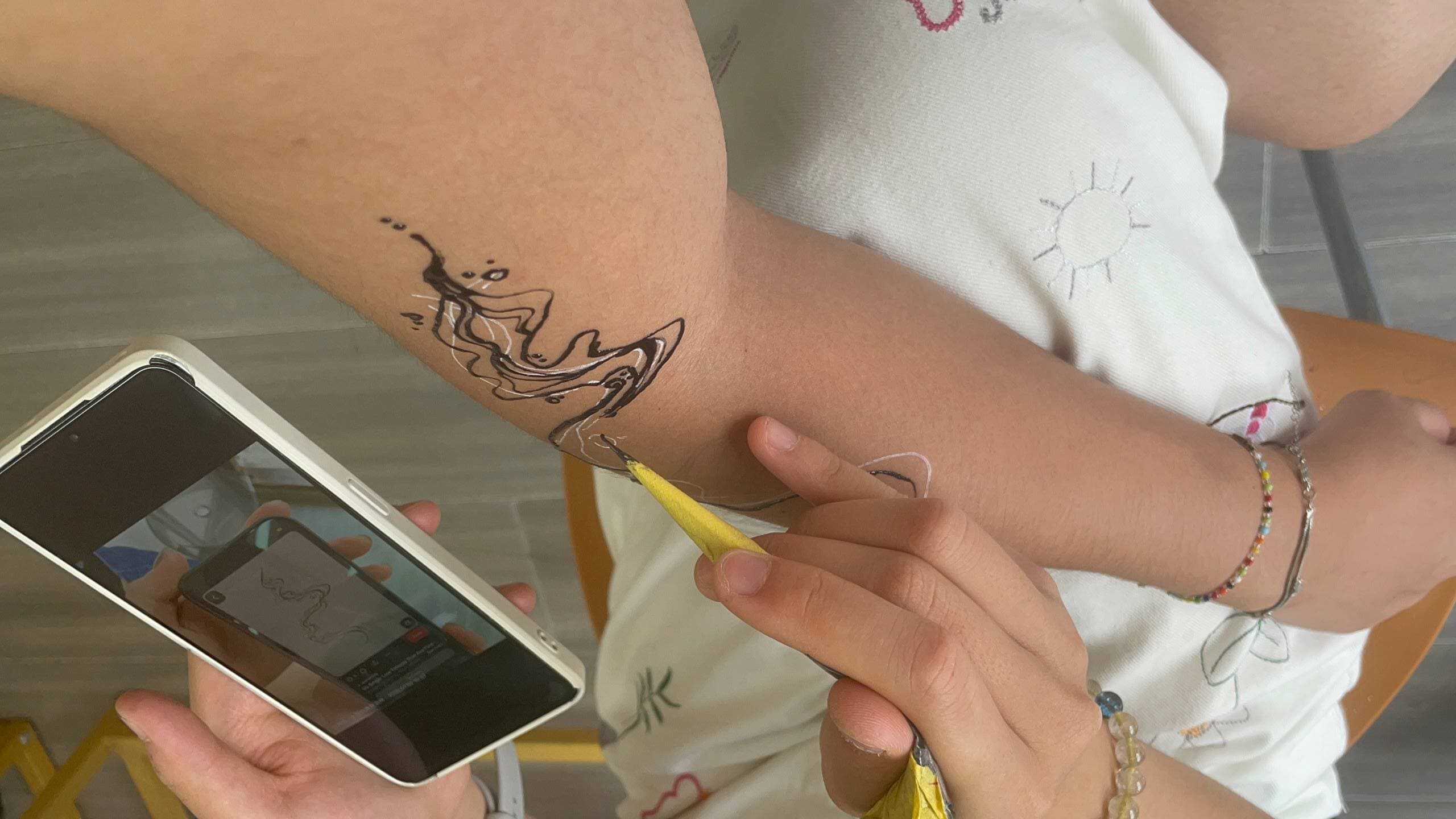
Instead, she turned to a Jagua artist who was boothing at the same event and got a tattoo on the spot. “I got to test the placement and style I would like without the scary commitment of a permanent tattoo,” Tegan shares.
Expression Without Consequences
Tegan believes Jagua resonates with youths because it allows personal expression without long-term commitment. “It’s kind of like wearing jewellery, just that this jewellery stays on for 2-3 weeks,” she explains.
Beyond trend-hopping, she sees Jagua as an accessible and affordable way for youths to explore visual identity, support artists, and appreciate art, all without committing to something permanent.
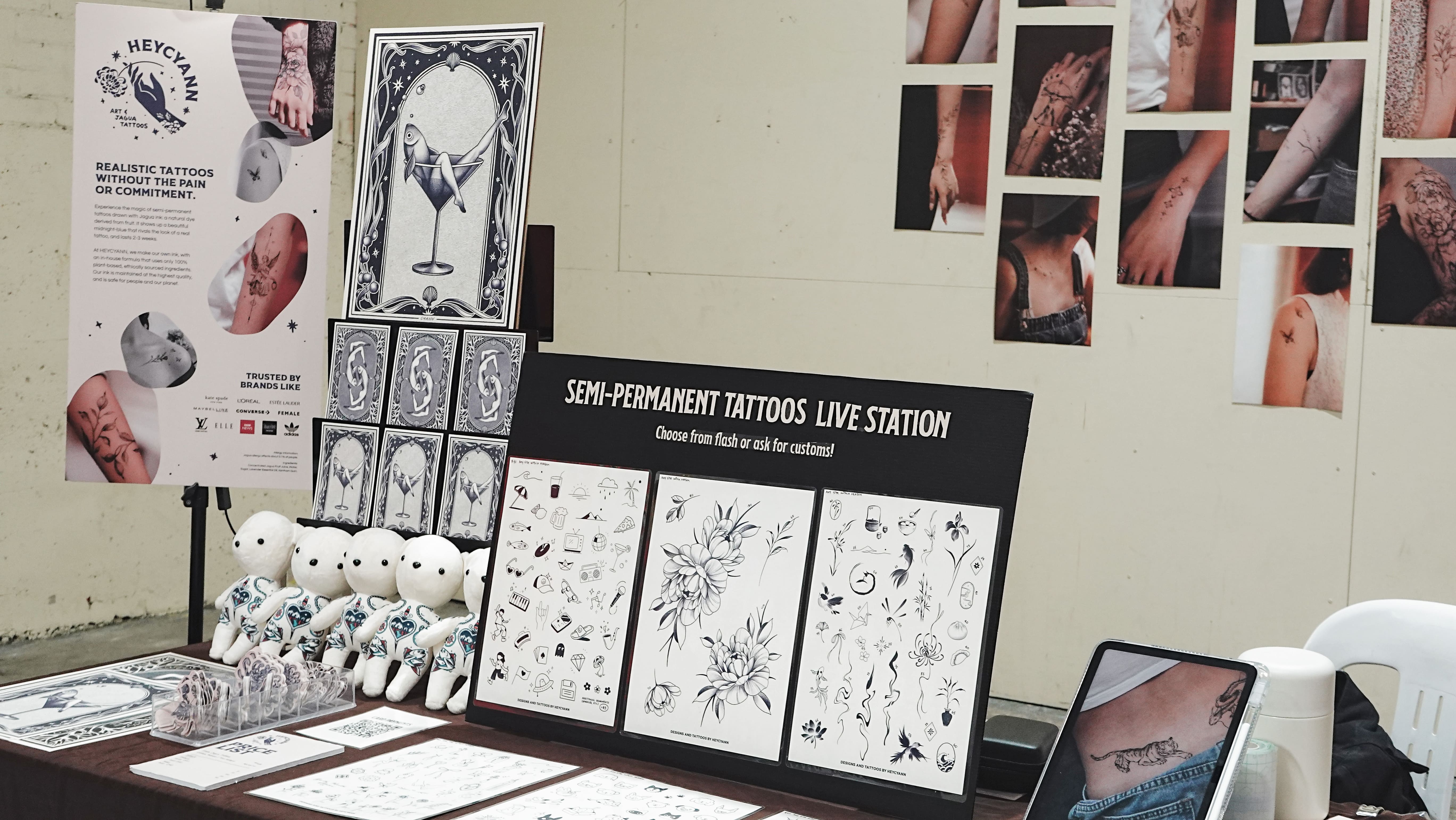
For many youths, this flexibility is precisely what makes Jagua appealing. Cyann views the growing popularity as an expansion of choice rather than an avoidance of commitment.
“I think people are gaining that kind of individualism to want to decide for themselves. Having a semi-permanent form like Jagua allows people to have that choice. Not necessarily between choosing a real tattoo or a fake tattoo, but more of making a choice for yourself,” Cyann explains.
From Temporary to Permanent
For Tegan, Jagua tattoos played a significant role in influencing her eventual decision to get a real tattoo. By frequently using Jagua before and after getting permanently inked, she was able to experiment with placements, styles, and size. “Jagua tattoos helped me a lot because I [could] decide exactly where I would enjoy seeing that size of tattoo or the design on wherever I place it,” she says.
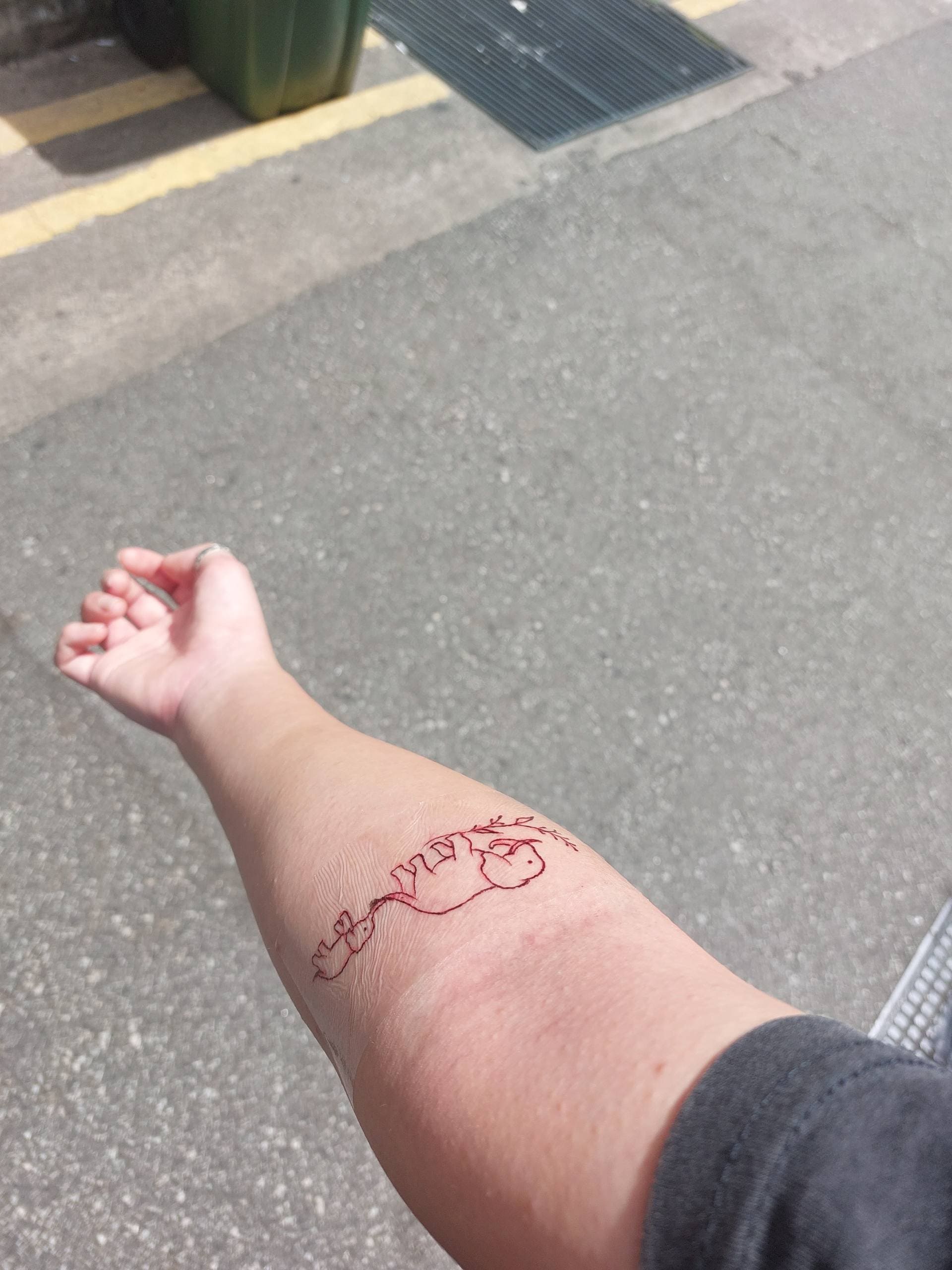
Cyann also sees many clients who use Jagua as a testing ground before committing to a real tattoo. “Actually I’ve had a few clients [who are] very scared to get their first tattoo. Then after I do it for them two weeks later, they send me a picture of their real tattoo,” Cyann shares.
Rather than replacing permanent tattoos, Jagua often becomes the final reassurance youths need before making that decision.
Is This About Avoiding Commitment?
While Jagua tattoos may appear non-committal on the surface, both Cyann and Tegan suggest that the appeal lies not in avoiding commitment, but in making space for change.
For youths navigating identity, aesthetics, and self-expression in a rapidly evolving world, Jagua offers more flexibility without erasing the possibility of permanence. It’s a form of body art that grows with them, rather than defining them forever.
In a world where youths are constantly expected to have their lives figured out, Jagua tattoos offer something refreshingly simple: permission to change your mind. For some, it’s a stepping stone to get permanently inked; for others, it’s an expression that exists only for a moment. Thus, Jagua tattoos are not about avoiding commitment, they are about allowing you space to grow, evolve, and choose when the time feels right.
Watch the video here: https://www.youtube.com/watch?v=2Hqooy7SITc