
 Sarah Adriana
Join SARAH ADRIANA at the Singapore Biennale 2025, where contemporary art spills beyond museum walls and into everyday public spaces – uncovering what pure intention means in Singapore’s evolving urban landscape.
Now in its eighth edition, the Singapore Biennale explores the theme of pure intention, as an SG60 commemorative event, marking Singapore’s 60th year of independence. Spanning five locations across the city, the Biennale invites visitors to rediscover Singapore through over 100 artworks by artists from Singapore, Southeast Asia, Argentina, Australia, and beyond.
At its core, pure intention is about how we look, move, and pay attention to the works around us. When The UrbanWire visited the Biennale, it became clear that this edition is less about passive viewing and more about reflection. Across museums, malls, and public spaces, the Biennale positions art as a tool for examining the lived experiences, social systems, and historical forces that continue to shape Singapore’s urban environment.
First Stop: Singapore Art Museum (Tanjong Pagar Distripark)
The Singapore Art Museum (SAM) at Tanjong Pagar Distripark sets the tone for the Biennale’s expansive approach. Art can be found throughout the space, from the entrance to the main exhibition gallery, cafe, and even the spaces outside the museum.
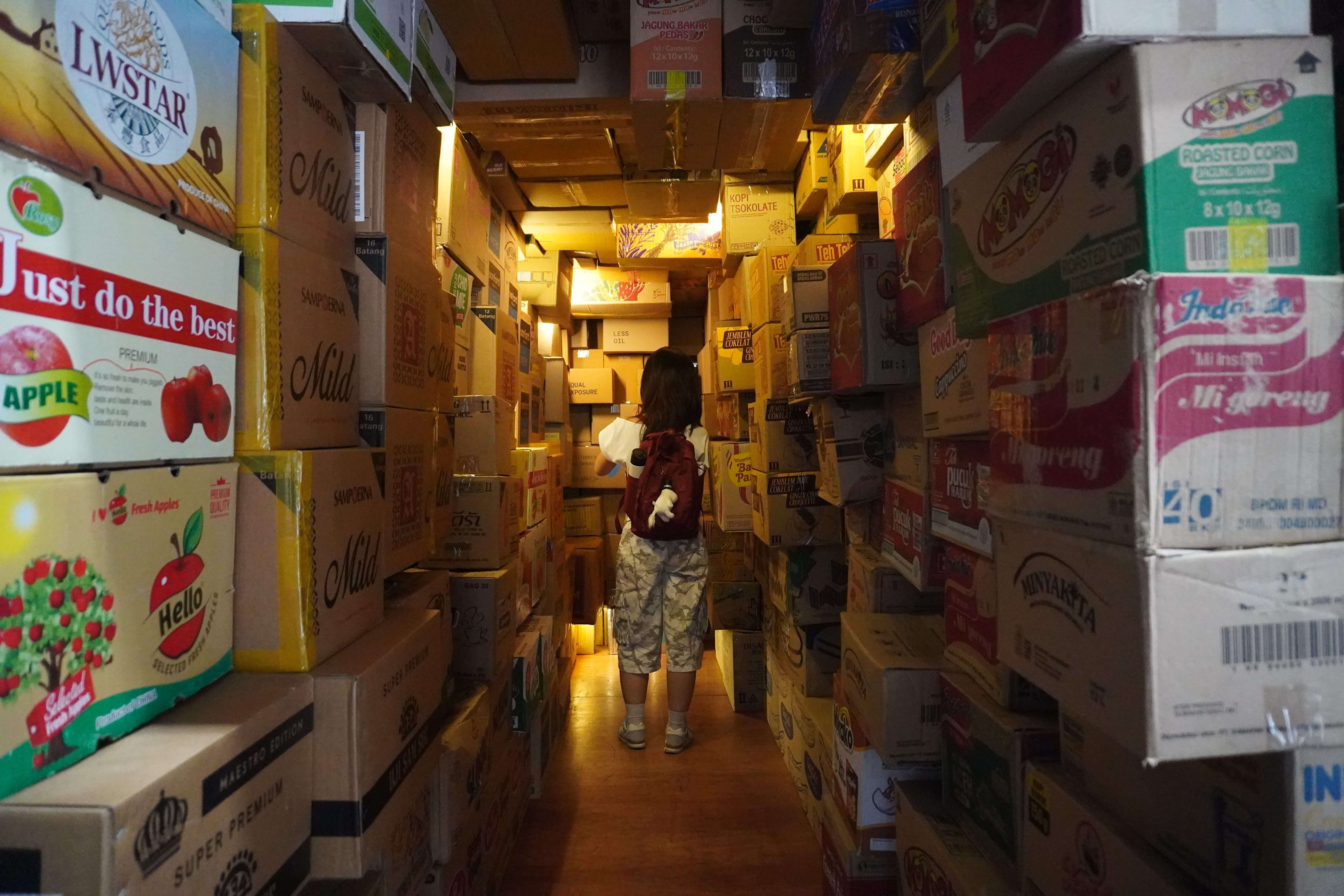
At the entrance, CAMP’s Metabolic Container reimagines a 20-foot shipping container using over 400 boxes of everyday goods transported weekly between Batam and Singapore. When tightly stacked, the installation reads like a cross-section of global trade, where crackers, sambal, perfumes, and less identifiable items coexist. It draws attention to the invisible systems that underpin daily consumption, linking maritime logistics to bodies, habits, and labour.
Beyond the artworks themselves, SAM becomes a space for visitors to reflect on Singapore’s development through contemporary art. Among them is Evan Tan, 37, who described the Biennale as “thought-provoking” and decided to visit out of both curiosity and convenience.
For Evan, the works on display prompt viewers to reconsider familiar narratives of progress. “This collection was touching upon themes of destruction, creation, colonialism, and modernisation. So, it’s quite interesting to think about that in the context of Singapore’s development,” he says.
Among the many installations, Offspring stood out for its immersive and sensory impact. “The lights and the smoke room,” Evan recalls, … “I was just standing there for a while and taking it all in. I think it’s generated by algorithms, [with] the way the piece changes over time. So, it was quite nice to take in a powerful sensory experience.”
Art In Everyday Spaces
Leaving the museum, the Biennale continues to unfold in unexpected places. Along Orchard Road, locations such as Lucky Plaza and Far East Shopping Centre are transformed as vacant units and commercial interiors become a site for artistic intervention.
At Lucky Plaza, we visited The Filipino Superwoman X H.O.M.E Karaoke Living Room, an interactive installation by Eisa Jocson, where a shop unit is transformed to replicate a Filipino living room. Designed as a welcoming communal space, it invites visitors to sing along to newly produced karaoke videos, including tracks by American singer-songwriter, Olivia Rodrigo.
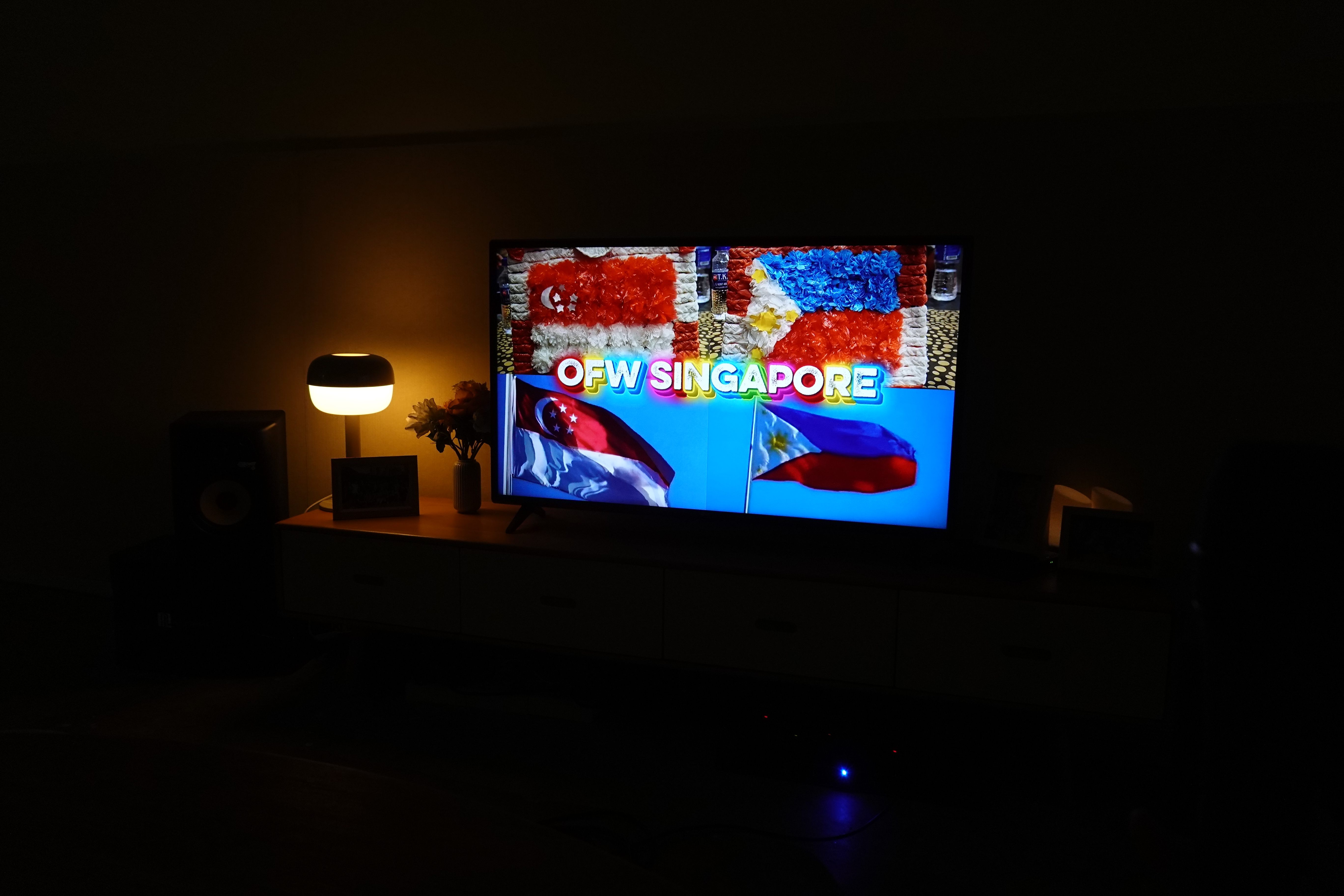
Created in collaboration with members of Humanitarian Organisation for Migration Economics (H.O.M.E.), a non-profit organisation that supports migrant workers in Singapore, the exhibition celebrates their resilience, collectiveness, and humour, while offering a space for expression, joy, and rest within a bustling commercial setting.
For Vincent Tan, 37, the experience left a lasting impression. “I thought [it] was such a heartfelt and real way to connect with people who are not from that diaspora – the people who live and work in Singapore,” he shares.
From there, we moved on to Far East Shopping Centre, where we encountered Yuri Pattison’s entropy study. Stepping inside the installation, visitors are surrounded by architectural scale models sourced from second-hand marketplaces – objects originally created for development projects in China.
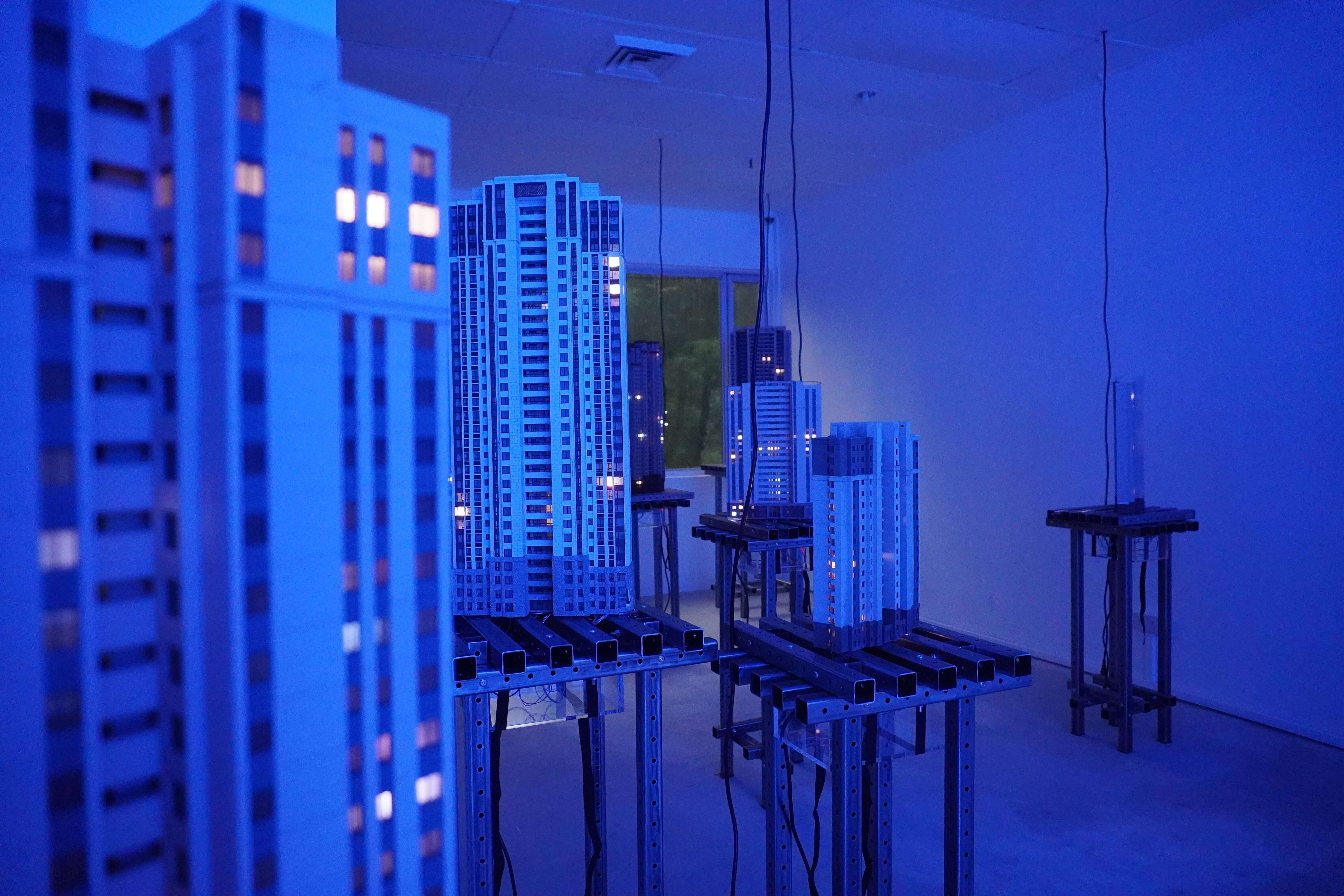
What stood out for Vincent was not just the installation itself, but the act of entering it. “I find the action of opening the doors, or sliding the doors, such an interesting way to remove yourself from one sort of public domain, and then go into the actual art space,” he explains.
This physical transition from the shopping mall to reflective interior, becomes part of the artwork’s impact. “This disconnect was the most interesting thing for me. It’s such a small, but salient experience to step out of the public space and into art,” Vincent reflects.
By situating entropy study within a functioning mall, the Biennale heightens awareness of how art can interrupt routine, creating brief moments of pause amid the constant flow of the city.
Sound, Light, and Wayfinding at Fort Canning
For our final stop of the day, we headed to Fort Canning Park, where the Biennale unfolds through movement, sound, and landscape. The installation Light Keeper by the artist collective simply known as lololol, invites visitors to experience the park through a GPS-enabled soundwalk, guiding them across landmarks, paths, and hidden corners of the historic site.
Rooted in the concept of 迷航 (mi hang) — a state of drifting or navigating uncertainty, the work encourages visitors to chart their own routes through the park. “The network of paths in the park offers a nonlinear journey and encourages the audience to utilise their innate motivations to seek and explore trajectories of their own,” lololol explains.
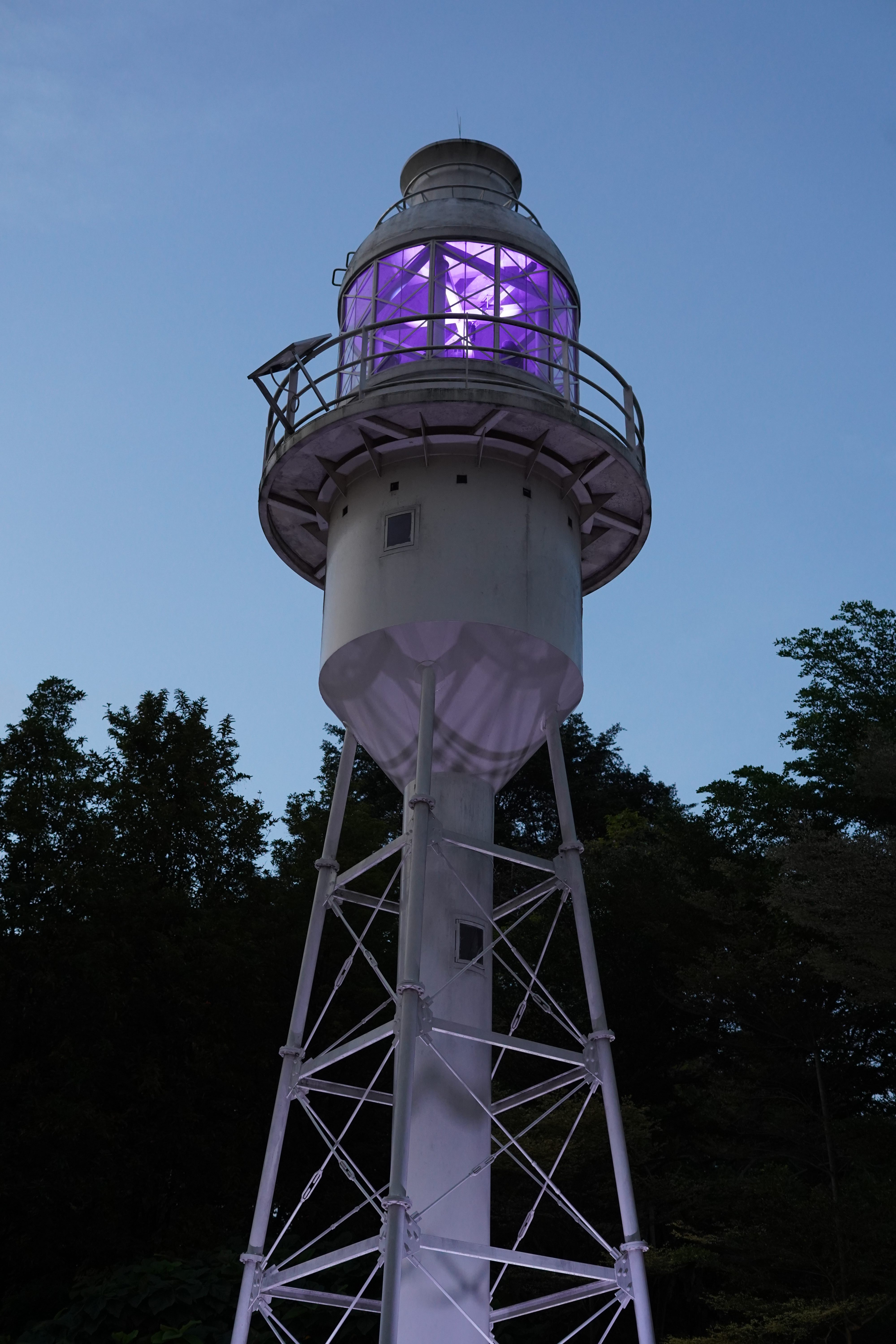
Using a mobile application, audio cues shift based on the visitor’s location, prompting visitors to reflect on how navigation, technology, and bodily movement shape our experience of space. As visitors complete the walk, the experience culminates at the Fort Canning Lighthouse, where a programmed light installation illuminates the structure at dusk.
“What also drew our attention was [Fort Canning’s] historical relevance to Singapore’s maritime history as a site that overlooked the Singapore river,” the collective shares. “We wanted to create a journey for the viewers to…move through and encounter as an augmented reality of the park.”
The rotating beam functions as a literal guide and symbolic gesture, extending Light Keeper’s exploration of orientation, communication, and uncertainty in a technology-driven world.
A City of Intentions
Across museums, malls, public parks, and more, the Singapore Biennale 2025 demonstrates how contemporary art can exist beyond institutional walls. Through pure intentions, the Biennale allows visitors to explore Singapore through a different lens from reimagined spaces, where art may invoke many new thoughts and experiences.
For Vincent, the experience extended beyond the artworks themselves. “I would recommend checking out the Singapore Biennale to anybody who not just wants to experience some art, but to see some of these places in Singapore which you may not have ever been to, and just really take in the whole vibe,” he shares.
In doing so, the Biennale reframes Singapore not just as a backdrop for art, but as an active participant, where visitors are allowed to reflect, wander, and engage.
Watch the video here: https://youtu.be/vEL8y2ETJJA