
 Koh Jing Yi Ryan
Join KOH JING YI RYAN as he explores Singapore Art Week (SAW), a premier visual arts season where global artists converge to push the boundaries of creativity. Beyond what meets the eye, these works invite us to experience art through touch, smell, sound, and sight, transforming exhibitions into immersive, multi-sensory encounters.
2026 marks the fourteenth year of Singapore Art Week, celebrating Singapore’s evolving artistic landscape. Over ten days, more than 100 events by local and international artists take place across museums, galleries, independent art spaces, and public venues, offering audiences a rich mix of exhibitions, programmes, and conversations throughout the island and online.
The UrbanWire captured Singapore Art Week in full swing this year, highlighting artists who are redefining the possibilities of contemporary visual art.
First Stop: chapalang
Situated in the Singapore Art Museum at Tanjong Pagar Distripark, the chapalang exhibit, organised by Gunalan Nadarajan and Roopesh Sitharan, may seem random and chaotic at first sight. Derived from a Singlish term to describe a haphazard mix of things, this exhibition embodies an attitude of randomness and ‘making do’.
One of the featured artworks mimics the act of dipping a teabag into a cup, using a fully automated mechanism. Translated from Chinese, this style of tea is locally known as “Fishing”, as the repeated dipping resembles a fishing bobber moving in the water.
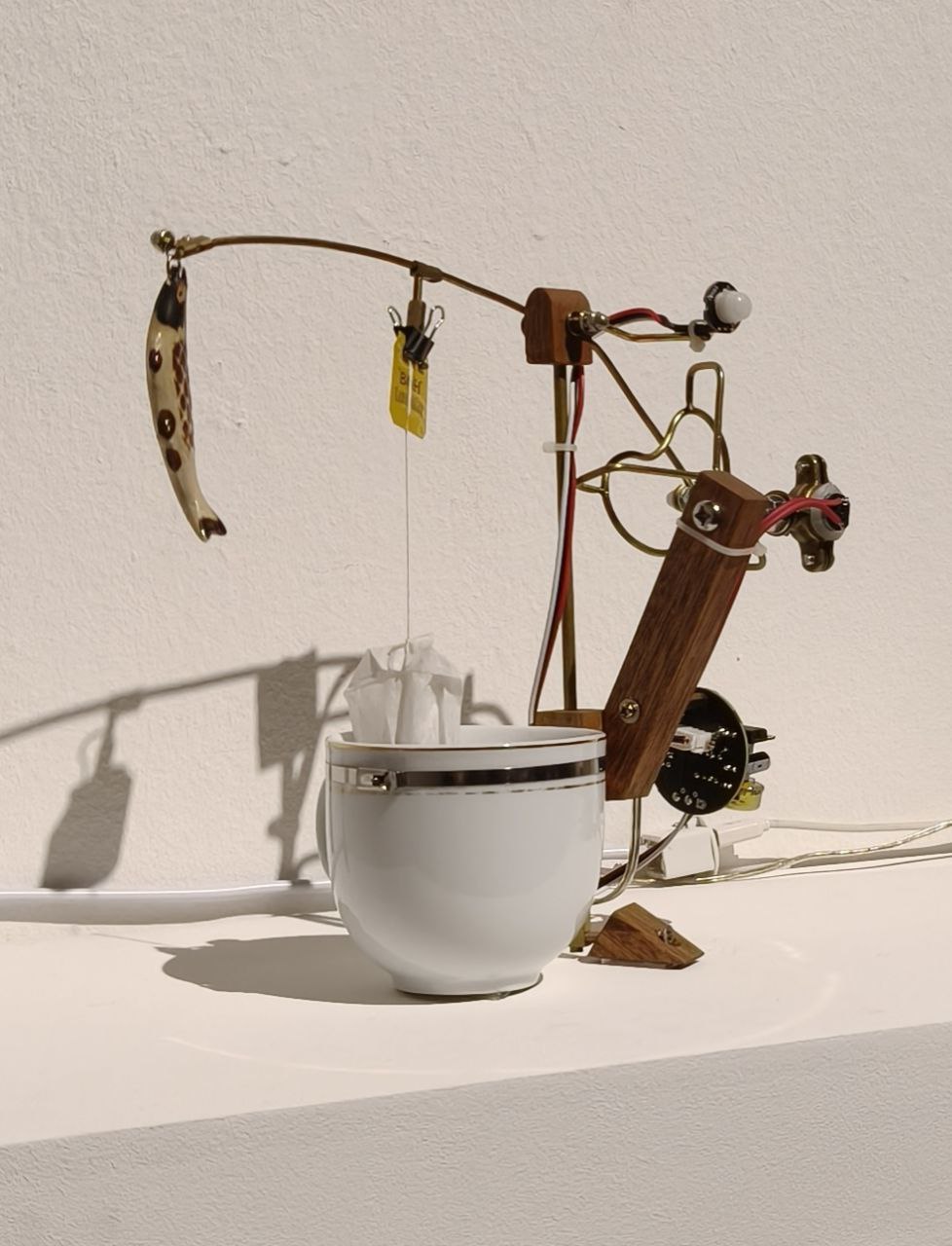
Designed to unsettle and prompt viewers to rethink their relationship with technology, this work encapsulates how a familiar cultural gesture can be transformed by mechanisation. A once-familiar human act now feels foreign and dislocated, inviting reflection on how technology reframes tradition.
When Material Speaks
As SAW unfolds across the city, a must-visit has to be Gillman Barracks, presenting an array of curated solo exhibitions at the former military base.
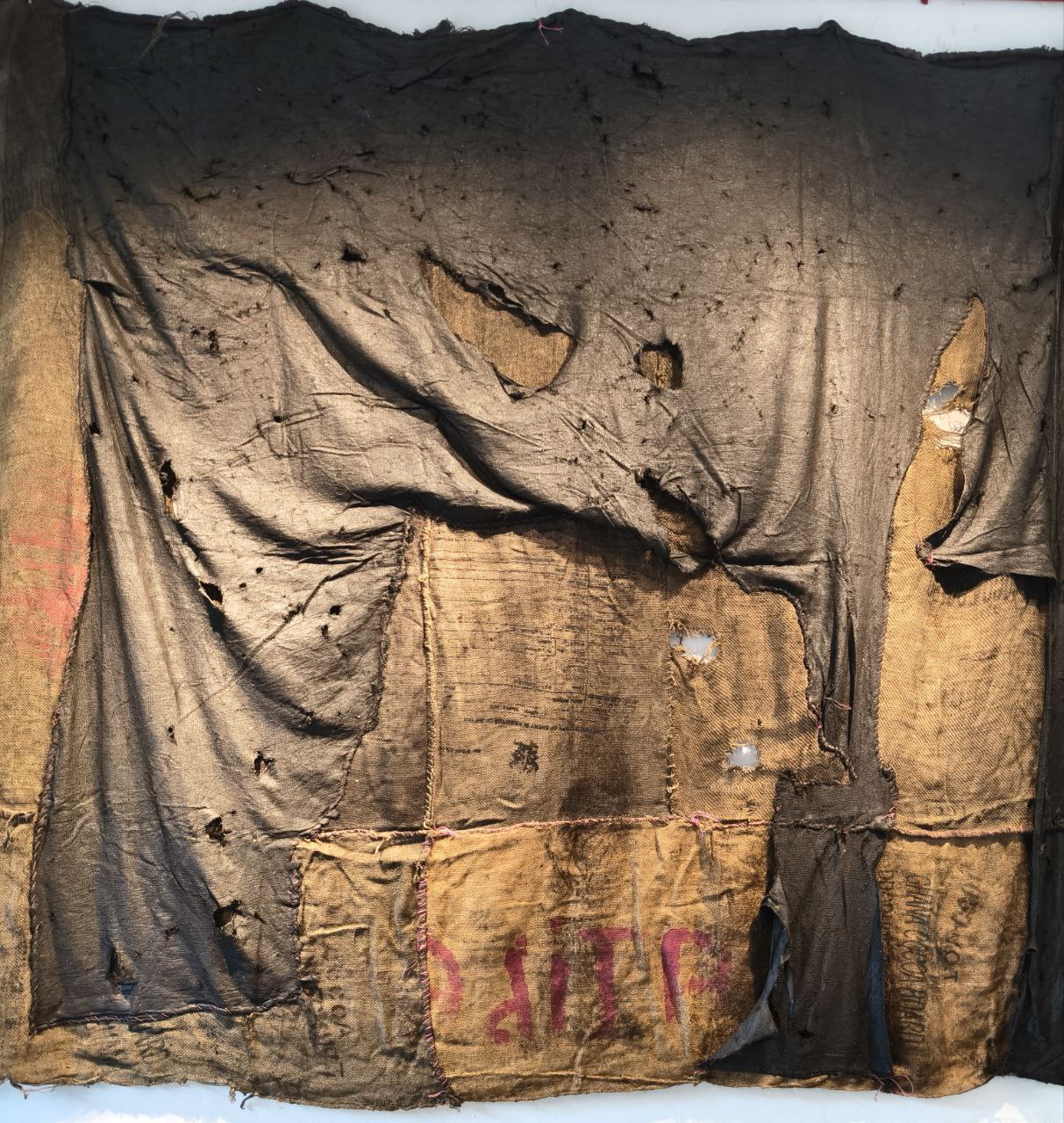
Starting off with Digging Stars by Ibrahim Mahama, the studio presents jute sacks (a durable fabric woven from the fibers of a Jute plant), and other discarded materials sewn together like a collage. These sacks were used to transport Ghanaian cocoa beans, which were handled by labourers. The rough texture and odd smell of the fabric pieces are meant to remind people that these seemingly insignificant “rubbish” materials bear stories and hidden histories.
Another striking piece of work features nameless and faceless labourers, illustrated on topographic paper. These chiseled men are largely shown with their backs to viewers, highlighting how labourers are often portrayed without an identity and are replaceable, much like parts in a machine.
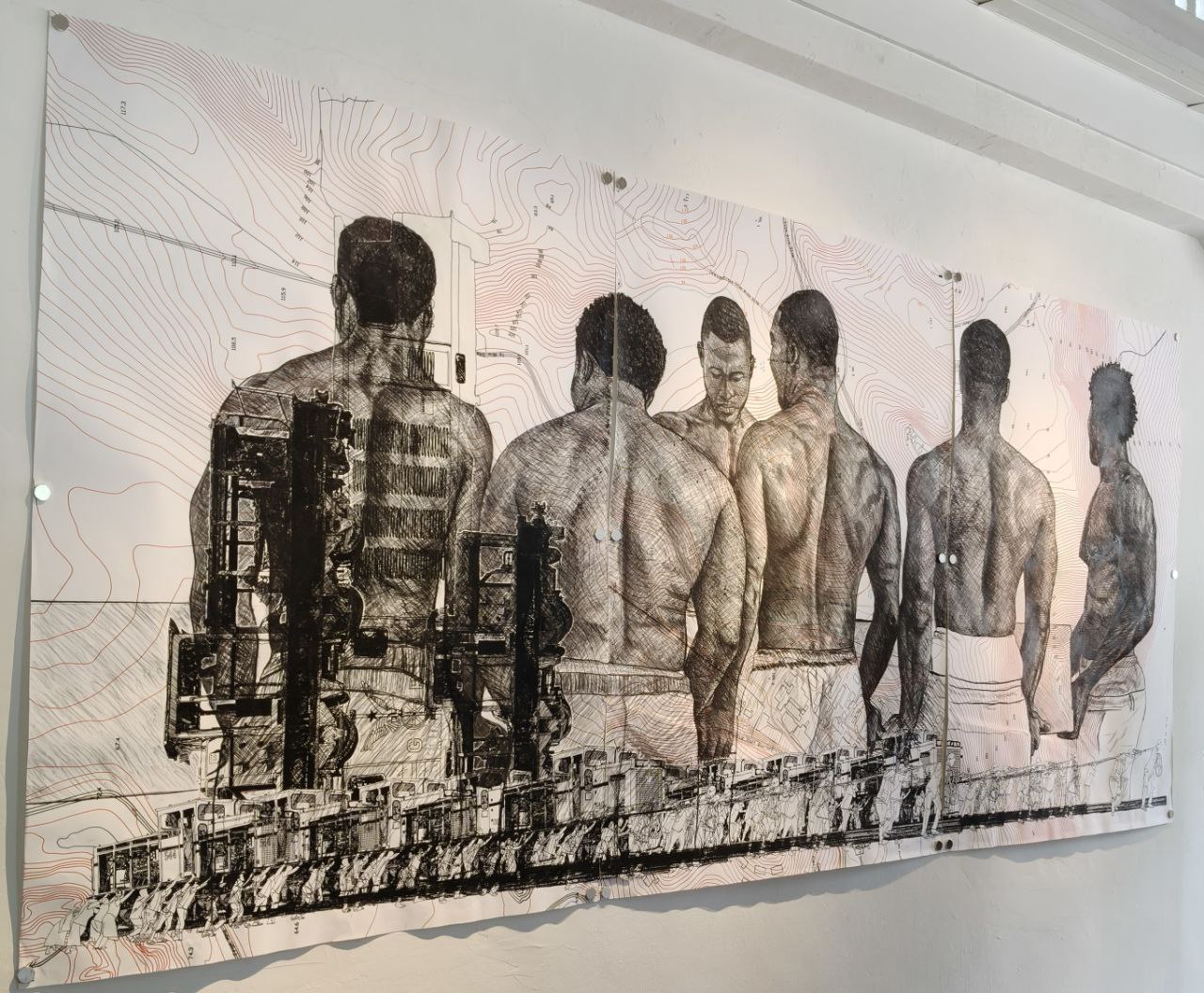
Though nameless, these labourers are crucial in providing and shaping luxuries enjoyed today, prompting viewers to be grateful and count their blessings.
UrbanWire meets Urban Monkeys
Scattered across Gillman Barracks, one would be able to spot four large inflatable monkey sculptures, by none other than Singaporean urban artist ANTZ, who transformed his usual graffiti art into massive inflatables.
Inside a little pop-up studio, ANTZ’s colourful graffiti is plastered all over the walls with a recurring theme: monkeys. His pieces are heavily inspired by Sun Wukong, the Monkey King from Chinese mythology, popularised by the novel Journey to the West.
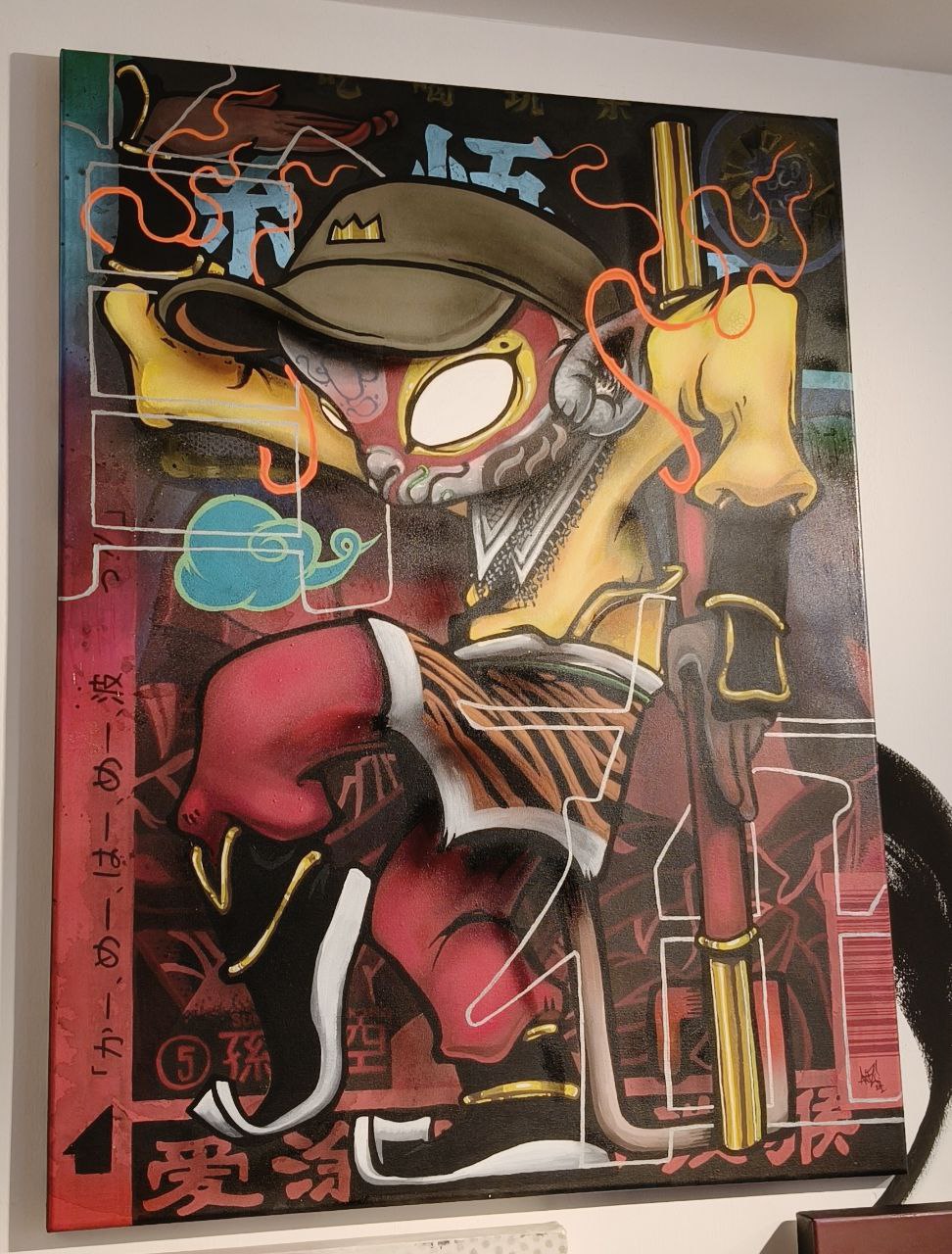
For ANTZ, being a graffiti artist is about constantly pushing to reach new heights, both literally and figuratively.
He explains that within graffiti culture, there is an unspoken rule to “go bigger every time” a piece is created. Describing himself as “evolving from out of the walls,” ANTZ shared his desire to work on increasingly larger scales, ideally featuring “as many monkeys as possible.” With a laugh, he summed up his approach simply, “Go big or go home.”
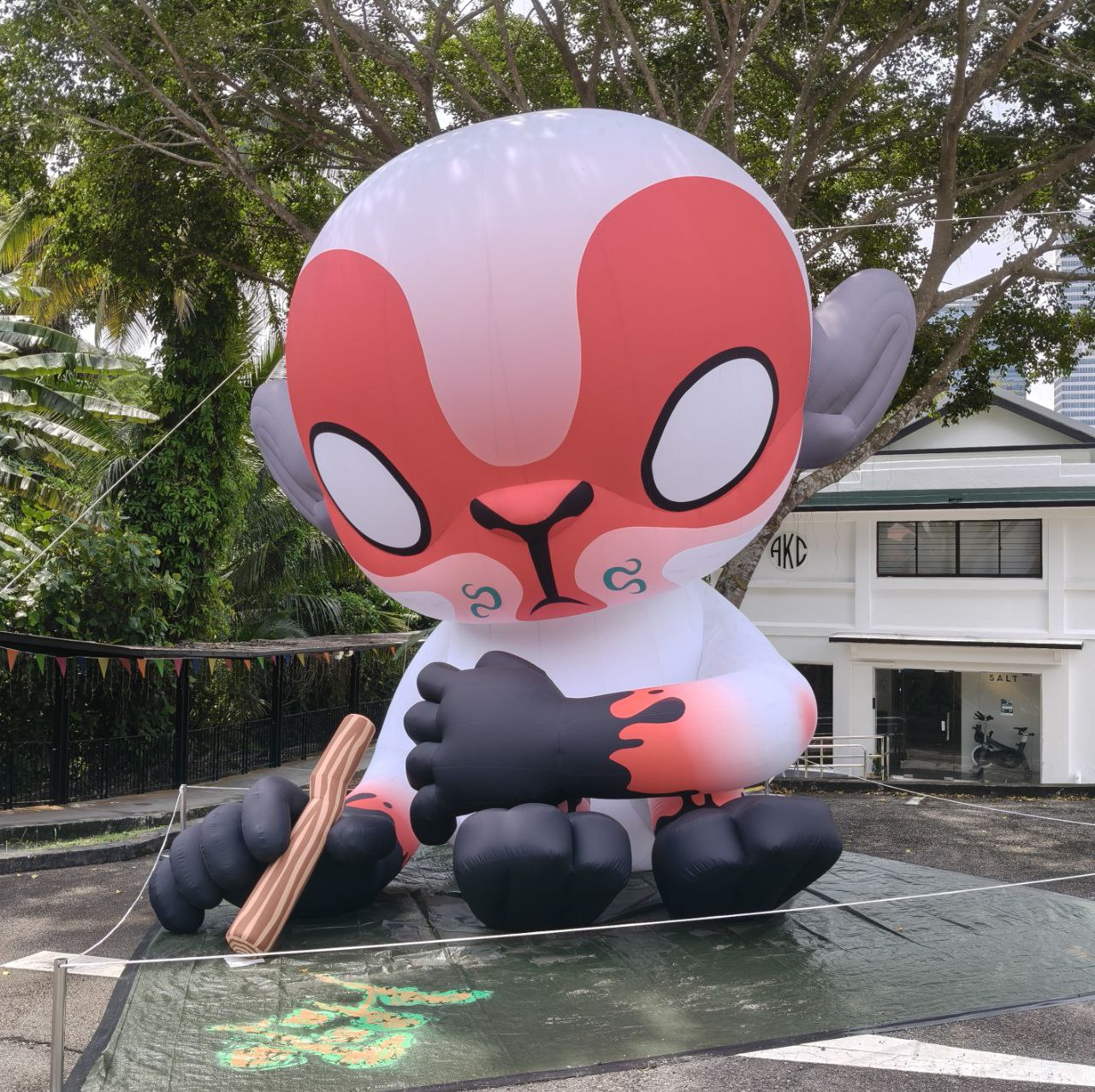
Beyond scale, ANTZ hopes his works bring “pure happiness” to audiences, encouraging visitors to “have fun with it” as they engage with his art.
When Night Becomes A Canvas
The day fades, but not the creativity of people. As night falls, art emerges through light shows and projection mapping.
Light to Night 2026 brings this energy together under the theme “The Power in Us”, transforming the city with installations, facade projections, and performances that invite audiences to take part in shared experiences after dark.
Wreathed in gentle tones of blue and pink, The Arts House at the Old Parliament serves as a backdrop for the Larut’s Tears.
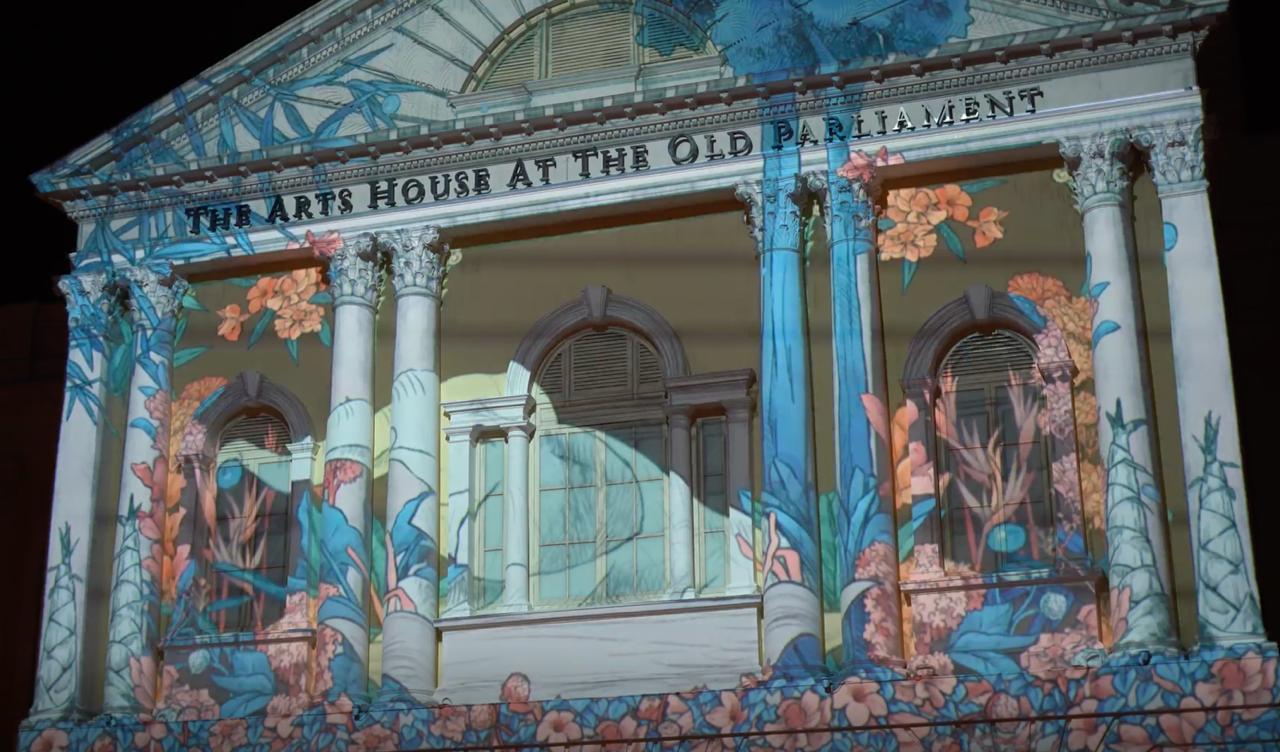
The work draws from a long term collaborative research project on ecological grief by Gerimis, Youngsook Choi, and the Semai communities in Pahang and Perak, Malaysia. By reframing the story of Larut the elephant, the work reflects on environmental exploitation through mining and monoculture, while contrasting these histories with ancestral practices that were harmonious with nature.
Co-artist Wen Di Sia hopes that her work could prompt people to “rethink their relationship to [with] the land and the environment”.
“Collectively as a community, we can change our ways of living, being and thinking that is away from extraction, [and] exploitation, to something that is more centered on [the] well-being of the community,” she explained.
More than just creative work on a medium
Co-artistic Director of Light to Night 2026, Ms. Koh Hui Ting also agrees that Singapore Art Week is “really about the people…shared history [and the] collective spirit that emerge[s] when we come together.”
Art is a collective shared experience. Its true power lies in bringing people and communities together. Visitors are invited to “feel connected to the artworks, to the city as well as to one another after experiencing the festival,” she added, carrying the shared energy and love for art beyond Singapore Art Week.
Watch the full video here: https://www.youtube.com/watch?v=JVFWJZAMEvM